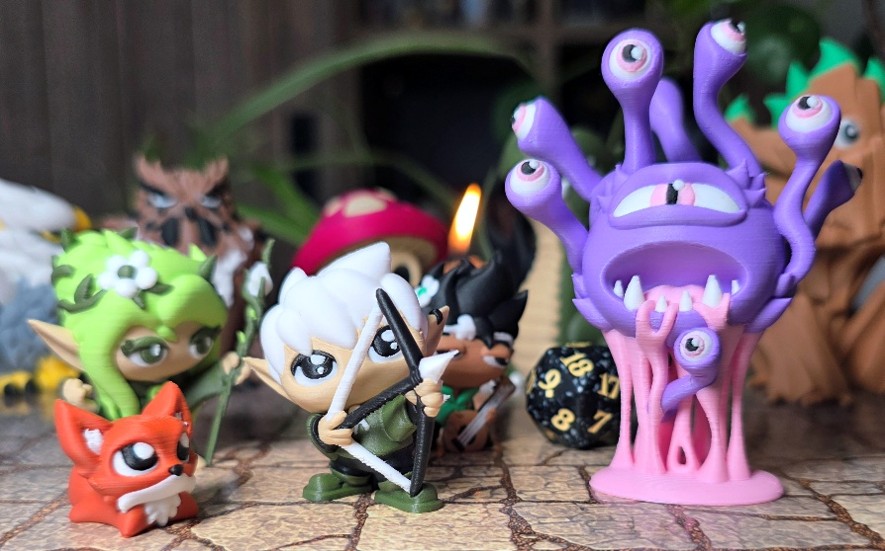
One of the biggest advantages of designing miniatures specifically for FDM is that you can often avoid supports entirely. And for miniatures, I think that matters a lot more than people sometimes realize.
Supports are useful. They let you print geometry that would otherwise be impossible. But on a tiny model, they also create one of the biggest problems with FDM printing: ugly surfaces exactly where you don’t want them.
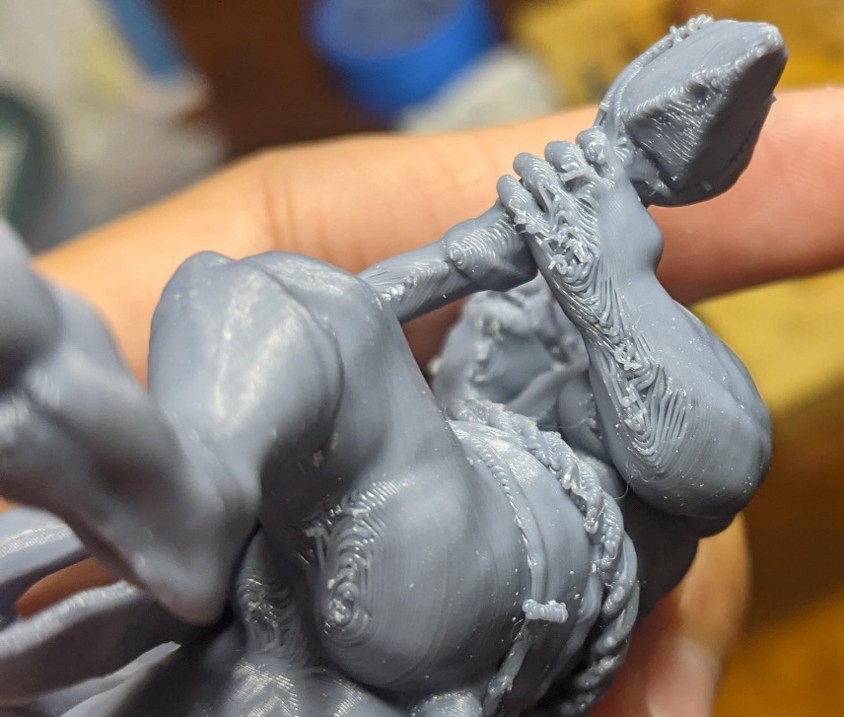
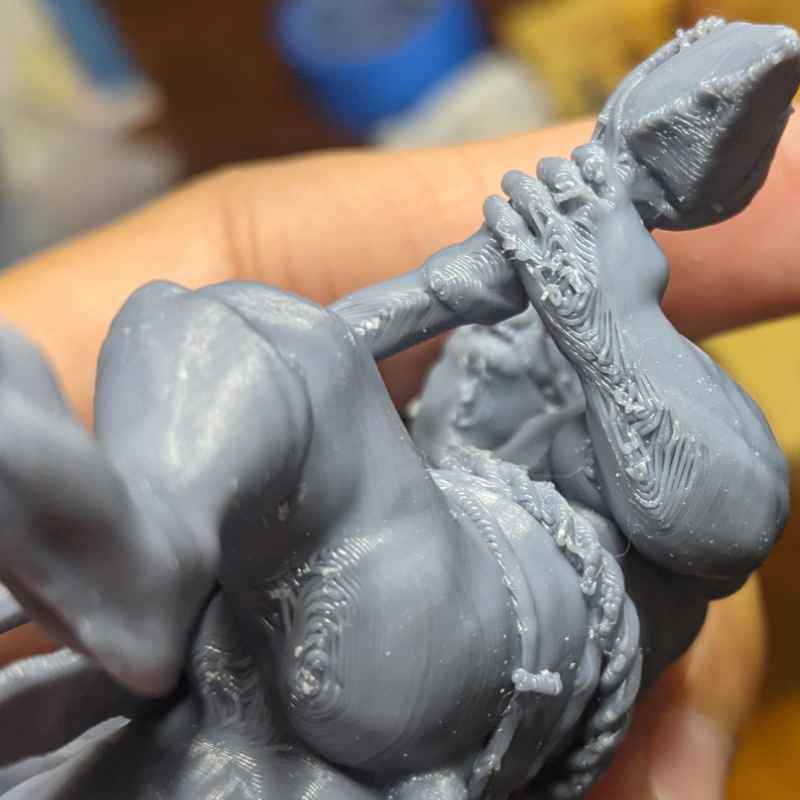
Werever a support touches the model, it can leave behind rough patches, scars or slightly sagging surfaces. On a big functional part, that’s usually not a big deal. On a miniature, that same rough patch might cover half of someone’s face, the underside of an arm, a cape or an entire weapon.
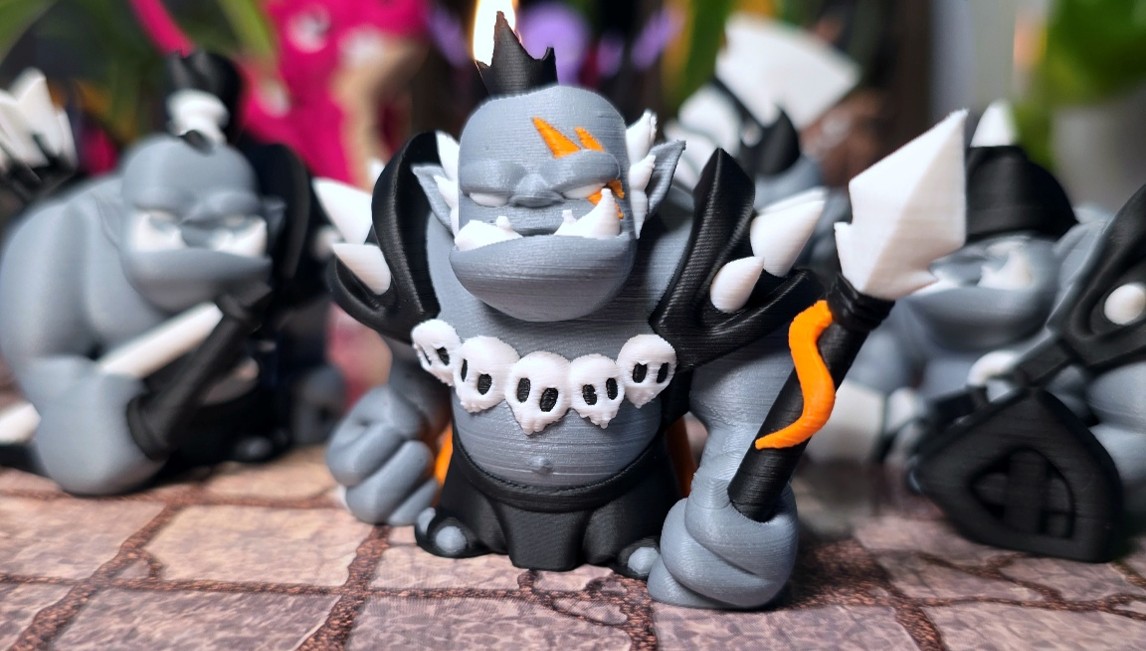
That’s why almost every SuperPrints model is designed to print completely support-free.
Why Supports Are Especially Difficult on Miniatures
Traditional resin miniatures can get away with extremely intricate poses, tiny details and dramatic overhangs because resin printing works very differently.
When you take that same kind of model and put it on an FDM printer, things can get difficult. You may be able to generate enough supports to make the print succeed, but the surfaces underneath those supports are often the ugliest parts of the finished model. And the smaller the detail, the harder it is to remove those supports without damaging something.
That’s not to say you can never print supported miniatures on FDM. You absolutely can. I just think it’s much better when the miniature is designed so that supports aren’t necessary in the first place.
Support-Free Printing Starts With the Model
This is the important part. You can’t take any random miniature, turn supports off and expect it to work.
When I sculpt a SuperPrints miniature, I’m constantly thinking about how every part of the model will actually be built by the printer. Instead of designing the miniature first and asking: “Where should I put the supports?”
I try to design the miniature so that question never needs to be asked.
That can affect surprisingly small decisions. An arm might need to be raised or lowered slightly. A sword can be tilted instead of held perfectly horizontal. A cape can follow the body rather than hanging far away from it. Small details can be reshaped so that each new layer has enough material underneath it.
Most of those changes are tiny visually. But they can completely change how well the model prints.
Overhangs Matter More Than They Look
FDM printers build a model layer by layer, from the bottom upward. That means every new section needs enough material underneath it to support the next layer.
If part of the miniature suddenly sticks too far outward, the printer is effectively trying to deposit plastic into mid-air. That’s when you start getting sagging surfaces, failed details or the need for supports.
So while I’m sculpting, I’m always thinking about the angle at which something grows upward. Weapons, elbows, noses, chins, sleeves, wings, horns, capes, … almost anything can become a problem if the angle is too aggressive.
The trick is keeping the pose interesting while quietly making sure the printer can actually build it. That’s honestly one of the most fun parts of designing FDM miniatures for me. It becomes a weird little puzzle.
Support-Free Doesn’t Mean Simple
I think there’s sometimes an assumption that making a model support-free means making it extremely basic. It doesn’t have to.
You can still have interesting poses, large weapons, capes, monsters, wings and plenty of small details. The challenge is designing those features around the printing process instead of ignoring it.
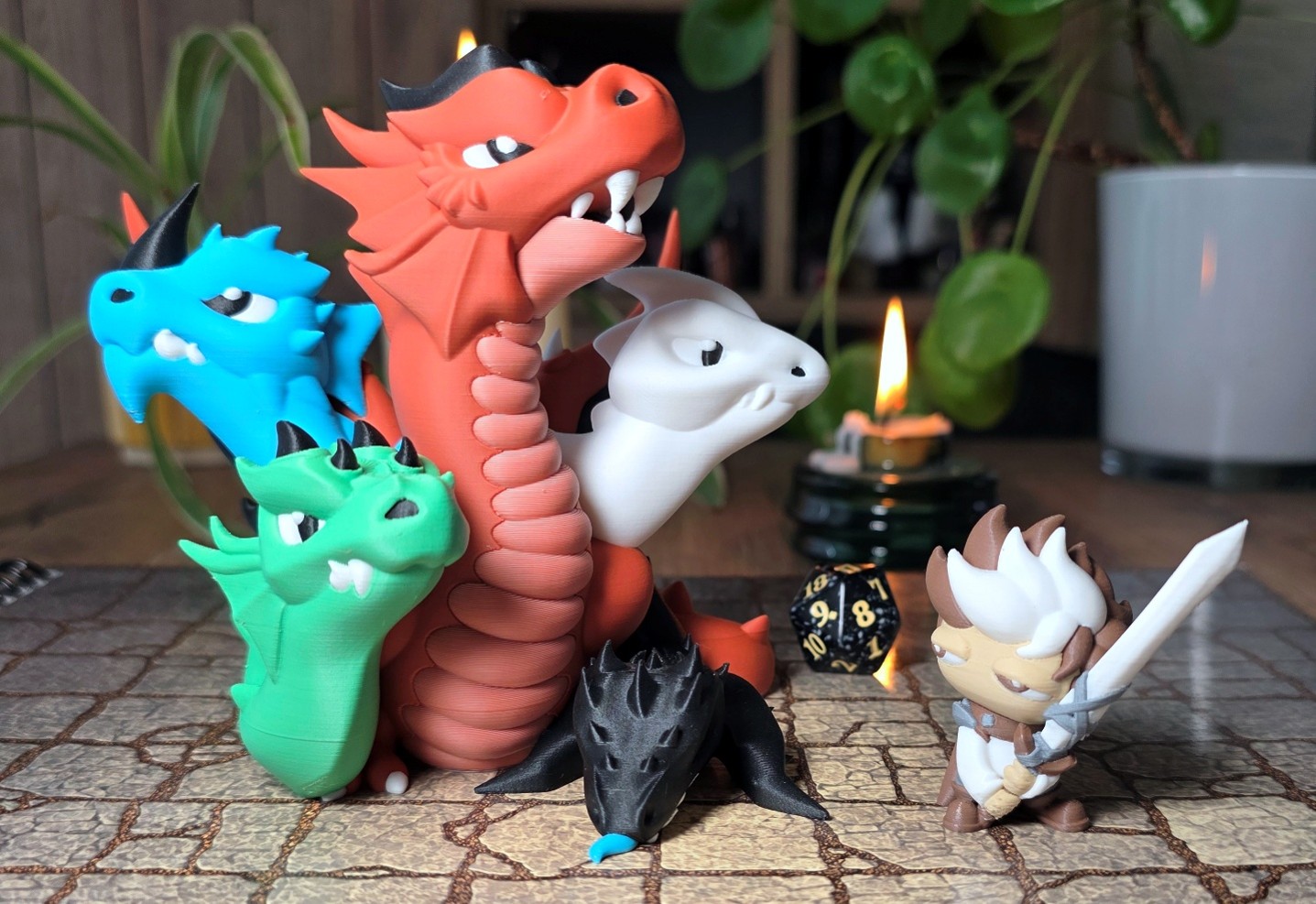
Sometimes that means moving something a few millimeters. Sometimes it means changing the angle of an entire arm. Sometimes I have to redesign a detail completely because it looks great on screen but I know it’s going to print horribly.
The final model should still look like the character I wanted to make. The FDM optimization should mostly disappear into the design.
Why I Prefer Support-Free Miniatures
The obvious advantage is convenience. No support generation. No tiny structures to remove. No worrying about snapping off a sword while trying to clean up the model.
But for me, the bigger advantage is surface quality. If a visible surface prints on its own, it comes off the printer as an actual part of the miniature instead of a surface that was resting on support material.
That means no support scars, no awkward sagging underneath overhangs and no tiny support structures stuck around fragile details. For something that’s supposed to come off the build plate looking finished, that makes a huge difference.
Can You Print Resin Miniatures Without Supports on FDM?
Sometimes. It really depends on the model.
A miniature designed for resin might happen to have a pose that works well on FDM too. But many resin sculpts use thin details, extreme overhangs and floating geometry that were never intended to print without support structures.
So if you’re trying to print a resin-oriented miniature on FDM, I wouldn’t assume that turning supports off is going to work. You may need supports, a different orientation or a few compromises in print quality.
That’s one of the main differences between a miniature that is simply printable on FDM and one that was actually designed for FDM from the beginning.
Read more: FDM vs Resin Miniatures: Which Is Better?
Do SuperPrints Really Not Need Supports?
Almost all of them, yes. That’s one of the main things I design around from the start.
There may occasionally be a model where some kind of support is unavoidable, but if that happens I’ll clearly mention it. The goal is always the same: make something that you can load onto the printer, press print and remove from the plate without spending another half hour cleaning it up afterward.
For my normal setup, that means:
0.4mm nozzle
0.12mm layer height
No supports
If you’re curious about the rest of the setup I use, I go through all of that in my FDM Miniature Settings Guide.
Final Thoughts
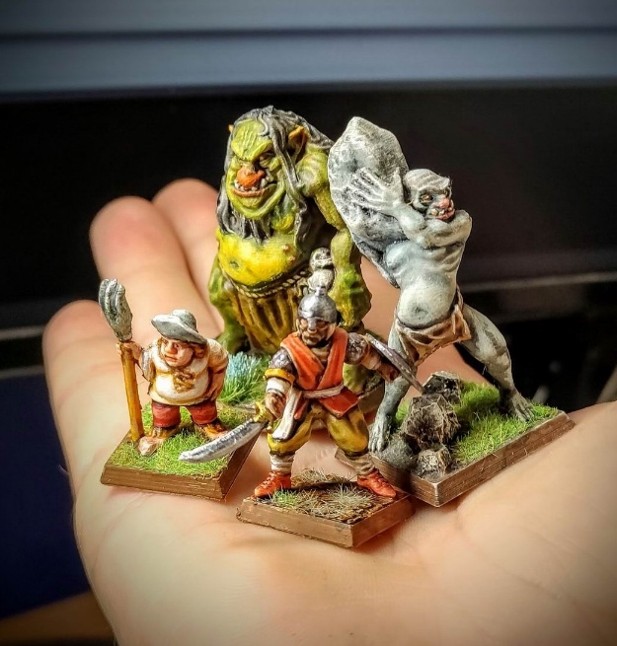
Supports aren’t inherently bad. They’re just something I try very hard to avoid on miniatures. For large prints, a small support scar might be completely irrelevant. On a tiny character, it can ruin one of the most visible parts of the model.
So rather than relying on the slicer to solve those problems later, I prefer solving them while I’m sculpting. That’s really the whole philosophy behind support-free FDM miniatures:
Design the model around the printer from the beginning.
When that works, you don’t need to fight the slicer afterward. You just print the miniature.