
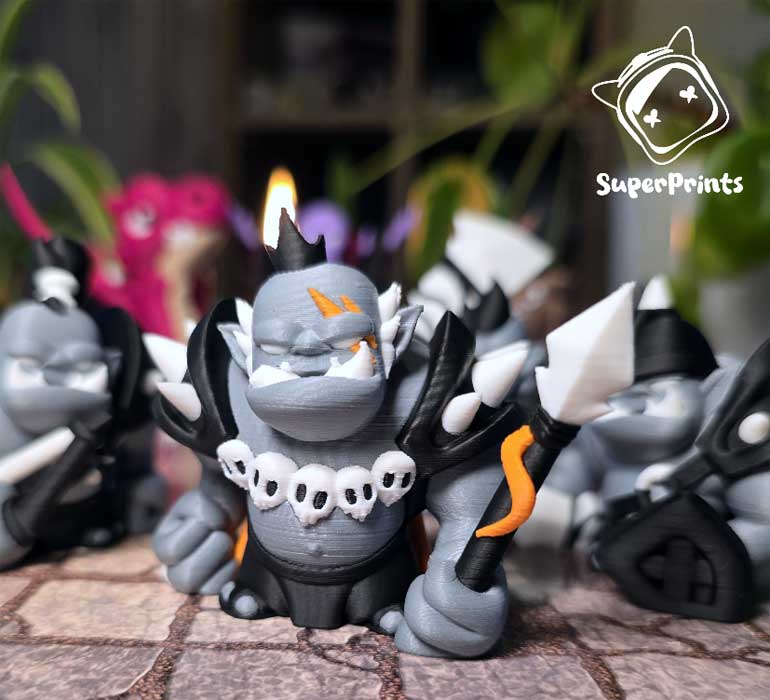
For a long time, resin was basically the default answer if you wanted to 3D print detailed tabletop miniatures. And honestly, there was a good reason for that.
Resin printers can reproduce extremely small features, thin weapons and fine surface detail that FDM printers traditionally struggled with. FDM was great for terrain, props and larger models, but miniatures were very much resin territory.
That gap has gotten a lot smaller.
Modern FDM printers are now capable of producing surprisingly detailed tabletop minis, and if the models are designed specifically around FDM, the results can be much better than people expect.
So which one should you actually use? It really depends on what you want from your miniatures.
Resin Miniatures: Maximum Detail
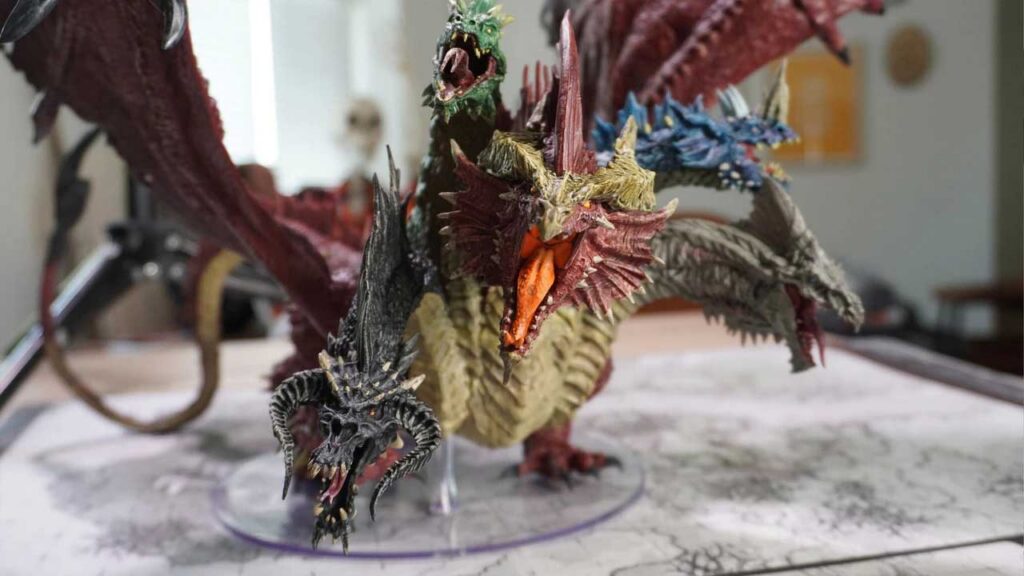
The biggest advantage of resin is still detail. Resin printers can reproduce extremely fine textures, tiny facial features, thin weapons and small details very cleanly. The surface finish is generally smoother too, with much less visible layering than FDM.
There’s also a huge library of miniatures designed specifically for resin. A lot of traditional tabletop sculpting assumes that the model will eventually be printed this way, so artists can use very thin geometry, intricate poses and tiny details without needing to think about the width of an FDM nozzle.
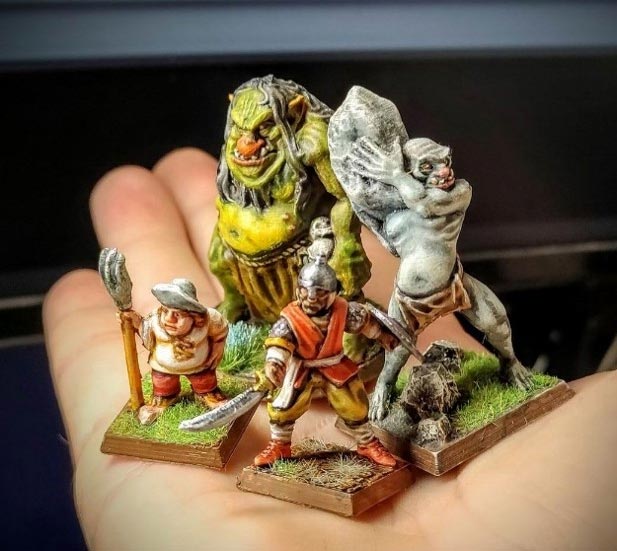
If you’re primarily a miniature painter and you want the maximum possible surface detail before you start painting, resin is still an excellent option.
Where Resin Gets More Complicated
The tradeoff is the workflow. Resin prints need more post-processing after they come off the printer. There’s washing, curing and cleanup involved, as well as the appropriate handling, ventilation and protective equipment recommended for the resin you’re using.
The prints themselves can also be more brittle than typical PLA FDM prints.
None of that makes resin bad. It’s just a more involved process. For someone who genuinely enjoys miniature painting and wants the absolute highest level of detail, that extra work might be completely worth it. For somebody who mostly wants a pile of monsters ready for Friday night’s game, maybe not.
FDM Miniatures: A Much Simpler Workflow
FDM works very differently. Instead of liquid resin, an FDM printer melts plastic filament and builds the miniature layer by layer. PLA is one of the most common materials for this kind of printing.
The workflow is one of the biggest reasons I personally like FDM. There’s no washing or curing stage. Once the print is finished, you can remove it from the build plate and, if the model was designed properly, it can basically be ready to use.
FDM prints also tend to be tougher and more practical as gaming pieces. If a miniature is going to spend its life being thrown into storage boxes, transported to game nights and knocked around on a table, that’s a pretty useful advantage.
Filament is also relatively inexpensive, which makes FDM attractive when you’re printing a lot of gaming pieces.
FDM Can Print in Color
This is probably my favorite FDM advantage. A multicolor FDM printer can produce a miniature already colored.
You don’t necessarily have to paint it afterward.
That obviously isn’t a replacement for beautifully hand-painted miniatures if that’s something you enjoy doing. But if painting is the thing preventing you from ever actually getting your minis onto the table, multicolor FDM is a pretty compelling alternative.
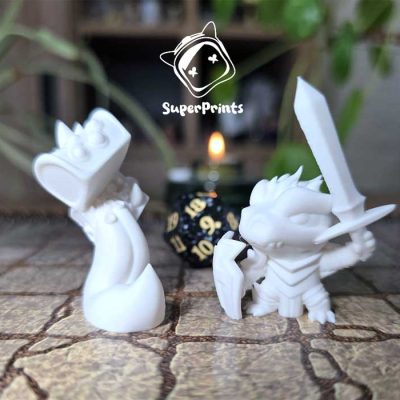
For SuperPrints, I create the different colors as separate geometry inside the model, which allows the printer to produce clean color boundaries without manually painting the model in the slicer.
→ Read: How to Print Multicolor FDM Miniatures Without Wasting a Ton of Filament
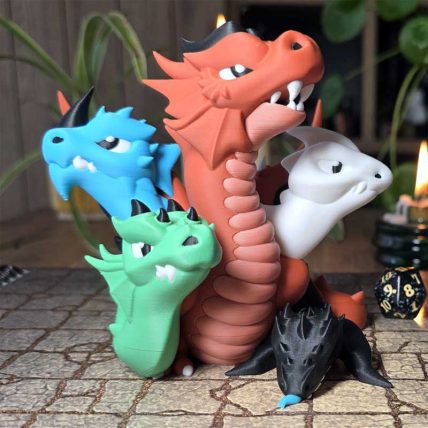
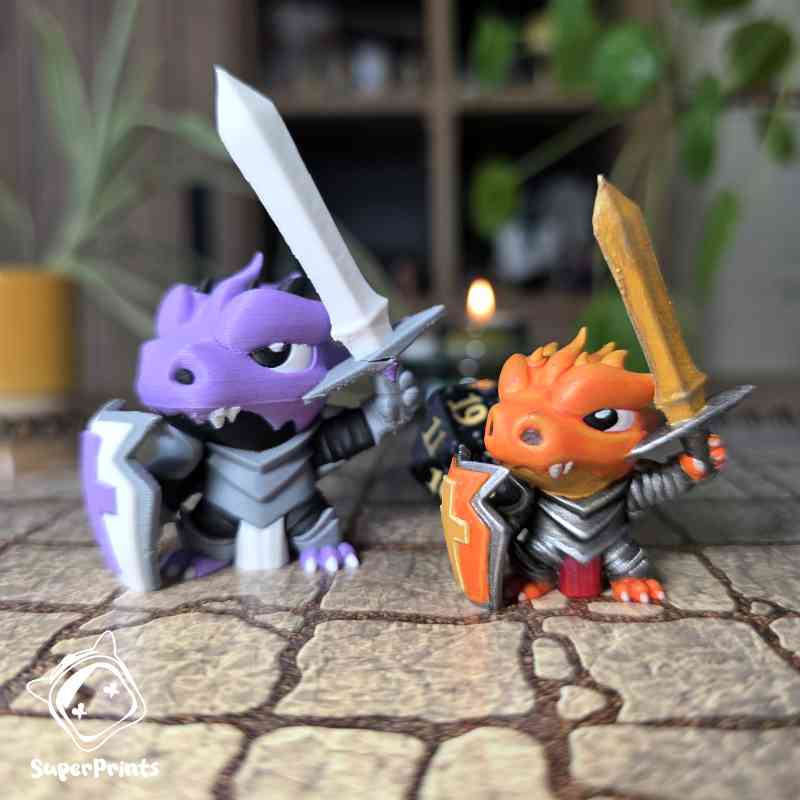
You can also just print the same models in one color and paint them normally.
Where FDM Still Loses to Resin
FDM definitely has limitations. The most obvious one is the nozzle. An FDM printer physically extrudes plastic through a nozzle, so there’s a limit to how small certain details can be. That’s why extremely thin swords, tiny textures and delicate details that work perfectly in resin don’t always translate well to FDM.
Layer lines are generally more visible too. You can reduce them with thinner layers, smaller nozzles and matte filament, but if your main goal is the smoothest possible surface and maximum tiny detail, resin still has the advantage.
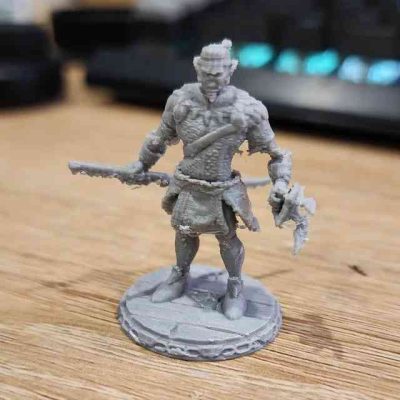
And importantly, a model designed for resin doesn’t automatically become a great FDM miniature just because you have a good FDM printer.
The Model Matters More With FDM
This is probably the biggest thing people miss when comparing the two technologies. A lot of STL files online are designed around resin printing. That means the sculptor can use very thin details, extreme overhangs and complicated geometry because the printing process can handle them.
FDM has different limitations. A model designed specifically for FDM needs to think about things like feature size, wall thickness, overhangs, bridging, weapons, contact with the build plate and where supports would normally be required.
That’s why there’s a big difference between: A resin miniature that happens to print on FDM and A miniature designed specifically for FDM.
When the model is designed around FDM from the beginning, a standard 0.4mm nozzle can produce much better results than you might expect.
à FDM Miniature Settings Guide.
→ Read: FDM Miniature Settings Guide
What About Supports?
This is another major difference in practice. Resin miniatures can use lots of small supports around complicated poses and overhangs. On FDM, supported surfaces can become rough, sag slightly or lose detail. On a miniature, those damaged areas are much more noticeable because everything is so small.
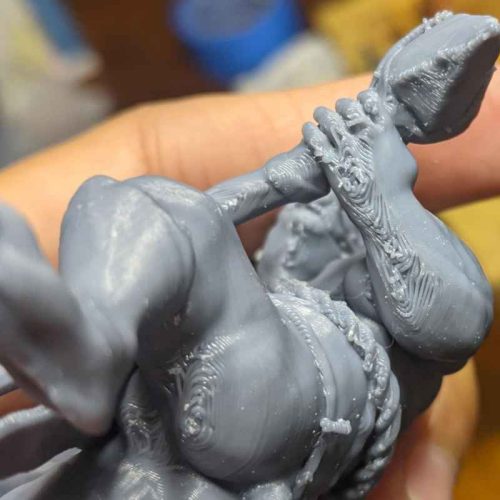
That’s one reason I design SuperPrints to be support-free wherever possible. Rather than sculpting whatever I want and figuring out supports afterward, I build the printability into the pose itself.
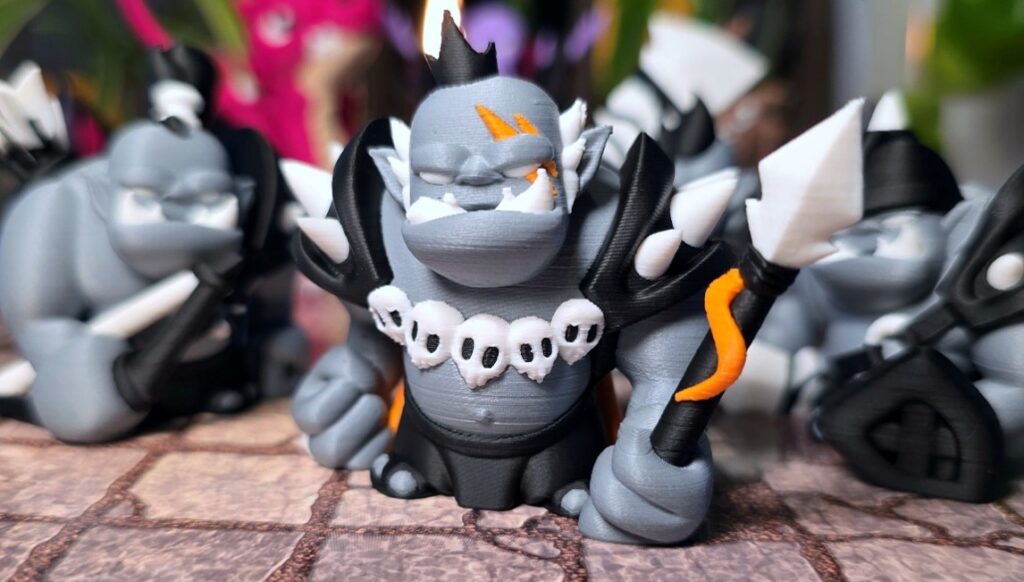
If you want to know more about that, I’ve written a separate article on How to Print FDM Miniatures Without Supports.
FDM vs Resin at a Glance
|
FDM |
Resin |
|
|
Detail |
Very good with FDM-optimized models |
Excellent |
|
Tiny features |
Limited by nozzle size |
Excellent |
|
Surface finish |
More visible layer lines |
Smoother |
|
Workflow |
Simple |
More involved |
|
Post-processing |
Minimal |
Washing and curing |
|
Multicolor printing |
Yes |
Generally printed single-color |
|
Durability |
Tough, practical gaming pieces |
Can be more brittle |
|
Model availability |
Growing |
Huge existing library |
|
Painting |
Optional with multicolor |
Usually part of the workflow |
|
Material cost |
Cheaper |
More expensive |
That’s basically the tradeoff.
So Which One Should You Choose?
If your priority is maximum detail and surface quality, especially if you enjoy painting miniatures, resin is probably still the better choice.
If your priority is ease of use, tougher gaming pieces, multicolor printing and minimal post-processing, FDM has become incredibly compelling.
And you don’t necessarily have to pick a side forever. They’re different tools.
The mistake, in my opinion, is thinking of FDM as simply a worse version of resin. It isn’t. It’s a different manufacturing process with different strengths.
Why I Chose FDM for SuperPrints
SuperPrints are designed around FDM from the beginning. I don’t sculpt a traditional resin miniature first and then try to force it through an FDM printer afterward.
The details are designed around real nozzle widths. The poses are designed to avoid supports. The colors are separate geometry. And the models are tested using the settings I actually recommend.
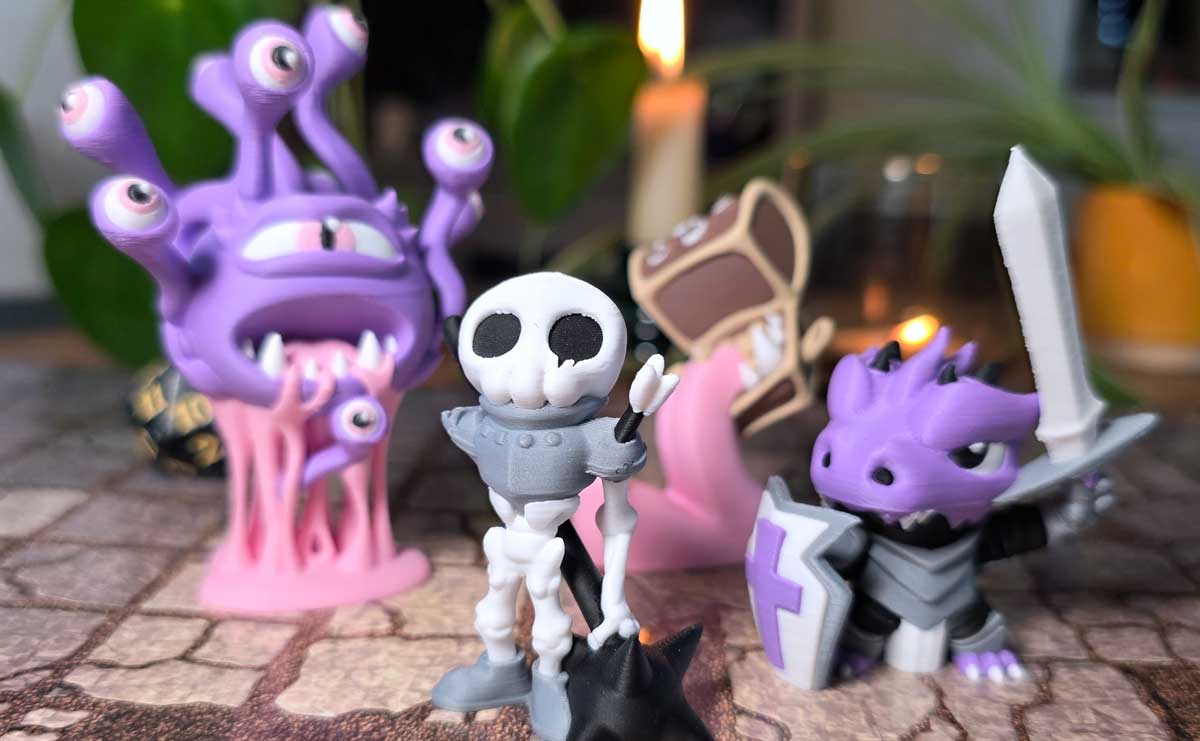
The goal isn’t necessarily to beat resin at the thing resin is best at. The goal is to take advantage of what FDM does well: easy, colorful, durable miniatures that can come off the build plate ready for the table.
And honestly, I think we’re still pretty early in seeing how far FDM miniatures can go.